
Stop Wasting Spend. Upgrade Programmatic the Right Way
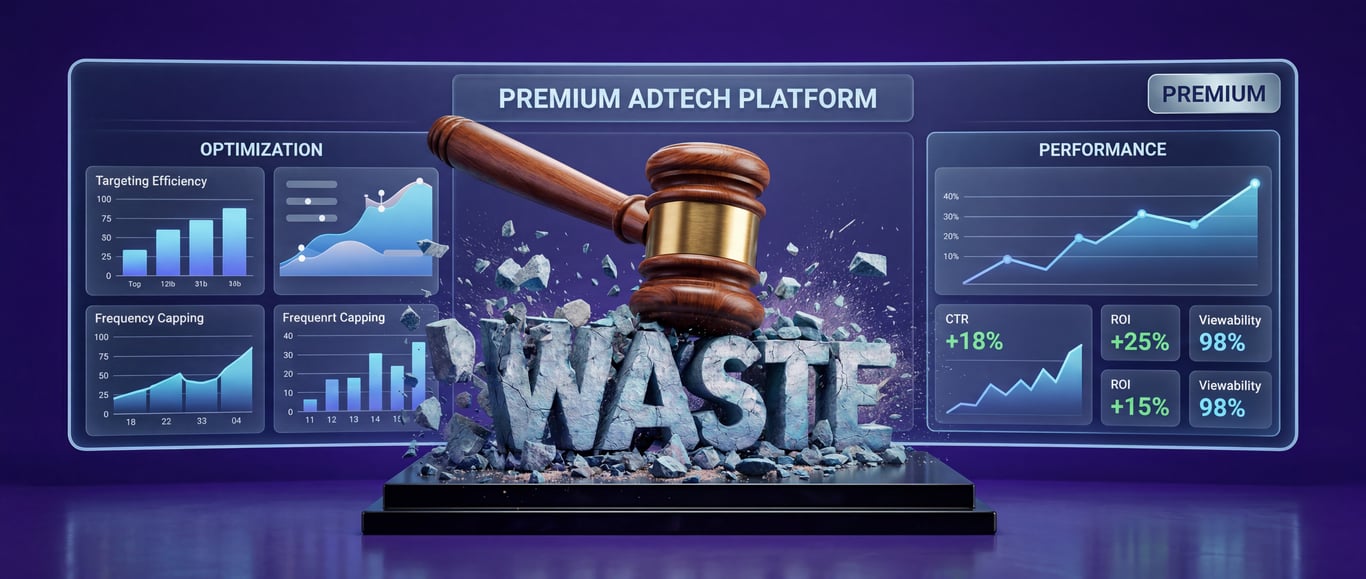
If your programmatic results feel "inconsistent", that is not a mystery. It is a clear warning.
You are buying too much inventory that never had a chance to perform.
Here is the upgrade that separates strong programs from noisy ones in 2026:
- Buy premium supply through cleaner paths
- Run formats built to earn attention
- Measure outcomes you can defend in a budget meeting
Premium streaming sellers are making the case that their inventory is worth more because it comes with control, authenticated reach, and proof. Digiday’s breakdown of Amazon’s pitch spells out the premium argument clearly.
At the same time, the industry is finally saying the quiet part out loud. CTV should be automated, but automation does not require more programmatic chaos. AdExchanger makes that point directly. That tension is the opportunity. Brands that tighten strategy now win share, performance, and confidence.
Want the cleanest path to premium performance?
Where Programmatic Waste Actually Comes From
Most programmatic waste does not appear in the places marketers expect. It rarely shows up as an obvious line item or a dramatic reporting error. Instead, it builds quietly through small decisions in how inventory is sourced, how creative is delivered, and how performance is evaluated.
A campaign may look efficient on the surface, yet still lose value through ignored impressions, complicated supply paths, or metrics that reward delivery rather than real impact. Understanding where this erosion happens is the first step toward correcting it. The patterns below explain where waste usually enters a programmatic strategy and why it often goes unnoticed until results begin to drift.
You are paying for “delivery” that never becomes attention
If the unit gets ignored, squeezed into clutter, or scrolled past, you did not buy performance. You bought exposure on paper. A simple rule: if your creative is not being seen, your targeting does not matter.
Your supply path is doing too much
Duplicated paths, resold inventory, and unnecessary hops dilute working media and muddy learning. If you cannot explain where you ran and why that path exists, you cannot defend the spend. If you want a clear internal primer on how deal choices affect performance, this explainer aligns teams fast: Direct IO and PMP, What’s the Difference
You are measuring the easy stuff, not the important stuff
Cheap clicks and cheap reach are easy to generate. Outcomes and quality are what protect budgets. If your reporting cannot connect delivery to real impact, your plan is vulnerable the moment finance asks one question: “what did we get for it?” this is the cleanest Next Millennium explainer.
How Brands Are Upgrading Programmatic in 2026
Programmatic is not disappearing. It is being rebuilt.
The shift is practical:
- Fewer unnecessary hops
- Tighter exposure to unstable inventory
- Cleaner supply relationships
- More emphasis on stability and repeatability
Brands that adapted early are not abandoning automation. They are choosing what deserves automation.
Step 1: Automate the workflow, not the risk
Automation should reduce friction. It should not multiply uncertainty.
The strongest teams are building automated buys that behave more like direct media. They keep the speed, but they remove the mess. AdExchanger’s take is the cleanest way to summarize the change: you can automate CTV without defaulting to wide-open programmatic complexity.
See how Next Millennium runs premium campaigns
Step 2: Tighten your supply paths
If you want stable performance, you want fewer, cleaner paths into premium environments.
Use SPO thinking even if you never say “SPO” out loud. The goal stays the same:
- Reduce duplication
- Reduce leakage
- Keep the buy explainable
If your team wants a practical reference, this guide is built for exactly this conversation: Supply Path Optimization (SPO) Explained
Step 3: Stop running creative that has to beg for attention
If your format looks like every other unit, you will get every other result. High-impact formats work because they create the conditions for attention. They reduce competition, improve visibility, and give the creative space to land.
What Next Millennium Does Differently
Next Millennium is built for buyers who want premium outcomes without premium confusion:
- Premium environments and cleaner access so your budget works harder, not just louder.
- High-impact formats that cut through banner blindness and give creative a fair shot.
- Hands-on execution so performance is engineered, not hoped for.
If you want the quick overview of what’s available on the advertiser side, start here with us.
Proof That This Approach Moves the Needle
You do not need a “nice story.” You need a result you can repeat.
In Next Millennium’s Hasbro case study, the campaign delivered a 237% increase in CTR, driven by high-impact execution designed to be noticed instead of ignored.
That is what upgrading programmatic looks like in practice. Cleaner paths plus better formats equals performance that shows up where it counts.
Copy-Paste Checklist for Your Next Campaign
Launching a programmatic campaign works best when the process is clear and disciplined. Clear rules, purposeful formats, and consistent monitoring make results repeatable. Approach each phase, before launch, in flight, and after, with intention to ensure every dollar drives measurable outcomes. This checklist makes the process straightforward and actionable.
Before launch
- Choose the right premium access model (Direct IO, PMP, curated, or controlled programmatic)
- Define your “no-go” inventory rules (paths, resellers, low-quality environments)
- Select formats that are built for attention, not just compliance
In flight
- Monitor supply path performance, not just placement lists
- Shift budget toward the environments that produce verified quality signals
- Treat attention and completion as leading indicators, not vanity metrics
After
- Keep what performed and cut what diluted the buy
- Turn learnings into a repeatable supply and format playbook
Frequently Asked Questions About RTB
Why are premium environments becoming more important in programmatic buying?
Premium environments typically offer stronger audience signals, controlled inventory quality, and clearer reporting. This makes campaign performance easier to evaluate and easier to defend when teams review results or adjust future media plans.
What does it mean to upgrade a programmatic strategy?
Upgrading a programmatic strategy means improving how inventory is sourced, how campaigns are structured, and how outcomes are measured. Instead of relying on broad open auctions, many brands now prioritize premium environments, cleaner supply paths, and formats designed to capture real attention.
What is supply path optimization in programmatic advertising?
Supply path optimization is the practice of choosing the most direct and efficient route between the buyer and the publisher. By reducing unnecessary intermediaries, advertisers gain better transparency, stronger performance signals, and more control over where campaigns run.
How do high-impact ad formats improve programmatic performance?
High-impact formats are designed to capture attention through stronger creative presentation, placement visibility, and interaction potential. When a format is built to stand out within the page or viewing experience, users are more likely to notice and engage with the message.
What role does automation play in modern programmatic campaigns?
Automation helps teams manage complex buying decisions at scale. Platforms can evaluate signals, adjust bids, and optimize delivery in real time. When combined with curated supply and premium inventory, automation allows campaigns to scale while maintaining control.
Stop Buying Noise. Upgrade Your Programmatic With Next Millennium
If your results feel inconsistent, it is usually because your buying strategy is trying to scale on top of messy inputs.
Premium inventory is getting positioned as “worth it” because buyers are tired of defending spend they cannot explain. At the same time, the market is waking up to a smarter truth: automation is valuable, but you do not need more programmatic chaos to get it.
Next Millennium sits right in that winning middle. Premium environments, high-impact formats, and execution that turns programmatic into something you can defend, scale, and repeat. Start here to see the advertiser
Ready to turn your next campaign into a growth story?

Denelle Williams

-1.png?width=520&height=294&name=Blog%20Hero%20images%20(1)-1.png)