The $7.4 Billion CTV Fraud Problem Nobody Wants to Name
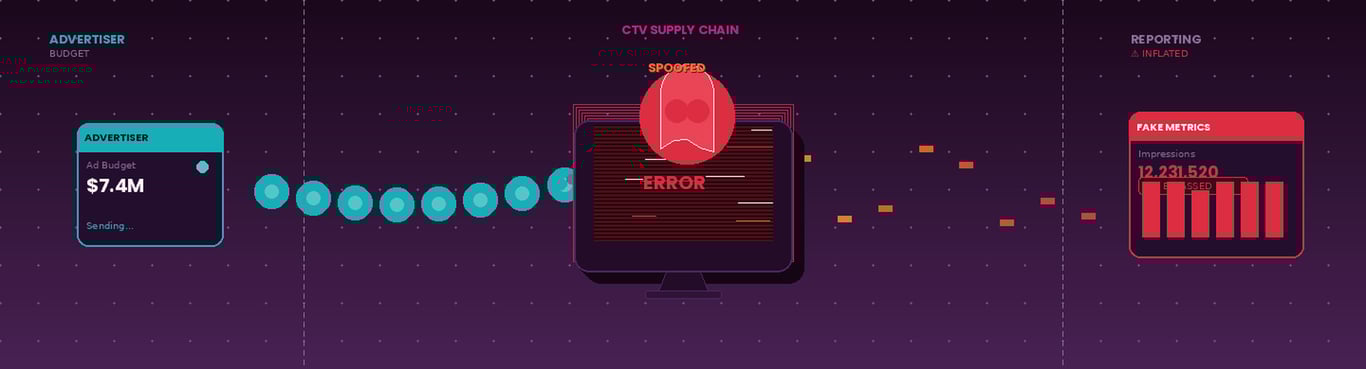
Connected TV has become one of the fastest-growing channels in digital advertising, and the money has followed. Brands are shifting billions into streaming budgets. Platforms are promising premium audiences, sharper targeting, and clean measurement. For many marketers, CTV feels like the logical next step after traditional TV.
But the same programmatic infrastructure driving CTV growth is the same one fraudsters have been exploiting in display and mobile for years. They did not ignore CTV. They followed the money, just like everyone else. Some estimates put global CTV ad fraud losses at $7.4 billion, and the number keeps climbing alongside the spend.
This is not a warning to stop investing in CTV. It is a reason to understand what you are actually buying when you do.
The Real Scale of the CTV Fraud Economy
CTV grew fast. Fraud grew faster. Most programmatic CTV inventory passes through several intermediaries before it ever reaches an advertiser. Every step in that chain is a place where fraudulent inventory can enter the mix, and because automated systems are built to optimize for scale, large volumes of bad impressions can move through exchanges before anyone catches them.
Research from Pixalate found that more than $1.1 billion in open programmatic CTV ad spend was lost to invalid traffic in a single quarter. Not a year. One quarter. Fraudulent impressions are built to look like real inventory inside automated systems, and in many cases, they do.
Why Higher CPMs Make CTV a Target Worth Chasing
CTV commands significantly higher CPMs than display. That gap is exactly why fraud operators find it attractive. If you can generate fake impressions that pass as CTV inventory, the payout per impression is far larger than anything you could squeeze out of display fraud. Even a small-scale scheme scales quickly at those rates.
Programmatic systems are also designed to move fast. Volume is the point. That speed creates windows where fraudulent traffic can pass through before verification layers catch it. As advertiser demand for CTV inventory rises, the incentive to supply fake versions of that inventory rises with it.
Why Connected TV Became a Target in the First Place
Fraud follows money. CTV is attracting enormous budgets as brands move away from traditional television buying. Unlike traditional TV, programmatic CTV transactions often touch supply-side platforms, exchanges, resellers, and data providers before the impression ever lands.
Each additional participant adds complexity and reduces visibility into where the inventory actually originates.
The Transparency Problem in Programmatic CTV
Most buyers never see the full path an impression travels before it hits their campaign. They rely on automated bidding systems and marketplace signals that do not always reveal how many middlemen were involved.
When the supply chain is this fragmented, verifying inventory source becomes genuinely difficult. Fraudsters exploit that gap deliberately, hiding manipulated traffic inside supply paths that look legitimate from the outside.
How CTV Ad Fraud Actually Works
CTV fraud does not work the same way as traditional display fraud. Fraudsters are not building fake websites and filling them with bots. They are manipulating signals inside programmatic systems.
By altering technical data, they make low-quality or entirely fake inventory appear to be premium streaming supply. Because programmatic auctions run on automated data signals, fraudulent impressions can look almost identical to legitimate ones at the point of purchase.
Device Spoofing
Device spoofing is one of the most common tactics. Fraudsters fake the signals that identify a streaming device, making an ad request appear to come from a Roku, Apple TV, or Amazon Fire TV.
Advertisers believe they are reaching viewers on living-room screens. The ads may actually be served to bots or simulated devices with no human on the other end.
Bundle ID Spoofing
Bundle ID spoofing targets the identifier that tells a buyer which streaming app is showing the ad. Fraudsters claim the inventory belongs to a recognized, premium platform. The ad ends up somewhere else entirely. Because many advertisers trust bundle IDs as a quality signal, this tactic can push buyers into paying premium CPMs for inventory that does not come close to what was promised.
Unauthorized Sellers
Fraud can also enter the ecosystem through unauthorized resellers. These intermediaries participate in the programmatic supply chain without proper authorization, often misrepresenting the inventory they distribute.
Industry tools like ads.txt and sellers.json were designed to address this, but adoption across the ecosystem is still uneven. Inventory labeled as direct-sold may actually pass through several unauthorized hands before reaching the buyer.
Read More: Ad Verification for CTV + Mobile Wins in 2026
Why the Industry Has Been Slow to Name It
CTV fraud does not get the attention it deserves, and the reasons are not hard to understand. CTV is still a major growth story. A lot of companies benefit from keeping that narrative intact. Openly discussing fraud risk could slow investment in a channel that many platforms and publishers depend on.
There is also a measurement problem. CTV measurement standards are still being worked out across devices and platforms. Without consistent baselines, it is harder to isolate and surface fraud signals.
A single programmatic CTV transaction may pass through several platforms, and no single player sees the full picture. That fragmentation is not just an operational headache. It is what allows fraudulent activity to stay hidden.
What Advertisers Should Be Doing Now
CTV is still one of the most powerful channels available for reaching audiences in a streaming-first world. The answer is not to pull back. It is to stop buying blindly. Advertisers who prioritize supply chain transparency and verified inventory sources are already spending more efficiently than those chasing scale without scrutiny.
Working with trusted partners, reducing unnecessary intermediaries, and demanding visibility into how inventory is sourced all reduce exposure to manipulated traffic. The fewer hands an impression passes through, the more you can actually verify about where it came from.
Prioritizing Attention Over Impressions
Counting impressions does not confirm that a real person saw your ad. Many advertisers have shifted toward attention-based measurement frameworks that analyze genuine engagement signals rather than simple delivery metrics. When you optimize for verified attention and transparent inventory, you protect your budget while still capturing the reach that makes CTV worth investing in.
Stop Funding the CTV Blind Spot and Optimize Smart
The CTV market is not broken. But it is less transparent than most buyers realize, and that gap costs them.
When campaigns produce weak or inconsistent results, the supply chain is often where the problem starts. Advertisers may believe they are buying premium streaming inventory. Their budgets may be passing through intermediaries where visibility disappears and dollars quietly accumulate in wasted spend.
The advertisers performing well in CTV right now are not the ones with the biggest impression counts. They are the ones who know where their inventory is coming from, what real engagement looks like in their campaigns, and how to defend every dollar they spend. Next Millennium gives advertisers direct access to verified CTV inventory with full supply chain transparency. No blind auctions. No mystery intermediaries. Just premium streaming inventory you can actually account for.

Denelle Williams